
In order to work as intended, this site stores cookies on your device. Accepting improves our site and provides you with personalized service.
Click here to learn more
Click here to learn more
Scimcon, the decades-strong leader in scientific informatics for the lab, has announced in 2021 that it has made a company-wide commitment to support Blood Cancer UK. After years of ad hoc charitable donations, Scimcon has decided that from 2021 the company will support one charity, and going forward all its charitable donations will be related to fundraising in the cause of Blood Cancer UK.
Geoff Parker, our co-founder explains: “When we really thought about it, it makes sense to ensure that the entire company aligns behind one cause. A company’s charitable contributions are not insignificant over time, and that’s why we are determined that every dollar and penny of our charitable contributions going forward will all be donated to our charity of choice. This means that every member of staff in Scimcon understands that from this year, without fail, we will all support this charity.”
Blood Cancer UK is a community dedicated to beating blood cancer. They do this by funding research and supporting those affected. Since 1960, the charity has invested over £500 million in blood cancer research, transforming treatments and saving lives. Right now, the Blood Cancer UK community is funding 167 researchers and staff across the UK who are searching for the next breakthrough. The day we will beat blood cancer is now in sight, and the charity’s researchers are determined to finish the job.
The charity also campaigns for change, helping to make sure that people get the healthcare they deserve, and that new treatments that come from research breakthroughs are available on the NHS.
Geoff adds, “As scientists working with scientific companies, Scimcon is committed to investment in science – it is our lifeblood. The fact that Blood Cancer UK is funding lifesaving research appeals to our ethos as a business. You only have to read the most recent annual report from the charity to learn what their money is spent on: Survival rates have improved dramatically over the last few decades, and even over the last 10 years we have seen blood cancer survival rates increase faster than survival rates for other cancers.”
In 2020, investing in life-saving research remained at the heart of their work, with the announcement of £6.5 million of new research funding. This money was spread across 15 projects, supporting the work of 169 researchers at 30 research institutions. This included a series of projects focused on acute myeloid leukaemia, which has one of the poorest outcomes. The researchers will identify better treatment targets, test the potential for repurposing existing drugs, and develop new ways to predict which patients will respond to current treatments.
They are also funding research that will look at how a key gene drives cancer development in children with Down’s Syndrome. Two Lymphoma teams will look at the role of the Epstein Barr Virus in the development of lymphomas, focusing on lymphomas and other blood cancers that develop as a result of treatment in people who have had an organ transplant. Blood Cancer UK also funded new research in myeloma, that will look at how myeloma develops and how patients respond to immunotherapies.
Thanks to previously funded research, there were 117 papers published in scientific journals during 2019/20. These papers covered a wide range of science, from laboratory research to clinical trials, and covered the full range of blood cancers. Geoff explains “In our small way, Scimcon might be working with companies who contribute to this mammoth effort. Our customers in laboratories worldwide are part of this great community, and Scimcon believes that money is only part of the effort to save lives. We are proud to be associated with Blood Cancer UK as our charity of choice.”
To learn more about the life-saving work Blood Cancer UK does, visit www.bloodcancer.org.uk
Scimcon goes carbon neutral?
2020 saw the migration of in-person events to virtual. Although this was a difficult decision for many organisers, online events do present organisers with the opportunity to reach their audience in new and innovative ways.
As a follow up to his first blog, we caught up with Luke Gibson, Founding Director of Open Pharma Research, about his experience moving Lab of the Future online in April 2021.
We debated going virtual for quite a long time, whilst many events organisers around us made the jump quite quickly. We looked at a lot of different platforms but had some doubts, as we are very sensitive about putting out a poor quality product and we know that you can’t just mimic online what you offer in person.
So, we decided to dip our toe in the water with our range of Digital Dialogues, which are essentially a variety of debates and discussions which keep us talking with our community. Following the success of these, we took the plunge and went ahead with our virtual conference in April 2021. It went really well, and not only did we learn a lot from the event, but we managed to reach a lot of people as well – we had 1,500 registrants, and at any one time we had over 550 people online in at the same time.
It definitely appeals to us to explore this approach further. We were growing anyway, and every time we hosted a new Digital Dialogue we were reaching new people, so there are definitely positives to moving online – you get a wider audience, it’s more accessible for a lot of people, and it does really allow you to go global.
On the flip side, the interactivity isn’t the same as with an in-person event. Physical events gather a lot of momentum each year they take place, and we had exciting growth expectations, which do tend to flatline when you pause physical activity. Stimulating the activity of people online takes a lot more management as well, but there are definitely elements we can take forward. On the whole though, I think people are looking forward to a return to physical events.
In terms of technology, the conference industry has actually had the opportunity to go virtual for around 20 years now. Although we’ve known that everything can be delivered online, we’ve continued with physical events, and it’s because they give you that human interactivity which can’t be mirrored online. The same sentiment can be applied to concerts – it’s just not the same streaming a live show as it is being in the crowd, and there is also a higher level of technology risk, such as those experienced in the recent Glastonbury event where users weren’t able to log in.
Virtual events don’t allow you to break down barriers the way that comes naturally in a physical environment, such as just chatting with someone in the coffee queue. Because you have that shared experience of being at the same event, you already have that common ground that opens up communication. A lot of people attend conferences due to the networking aspect, which can only occur when you’re surrounded by like-minded people.
So I think the value of physical conferences has been reinforced by their absence. However, our Digital Dialogues have been wonderful and relatively easy to do, so we’ve gained from this experience and will definitely look to continue those in the future. The debate we face now is what would hybrid events look like? There is a lot to consider; the main thing is that, rather than compromising and delivering an event that is part virtual and part physical, you need to offer a virtual component in addition to a full physical event. For example, you want to be able to host an event that is open to people who may not necessarily be able to travel or attend in person, so that would be an addition to the event. What you don’t want is people deciding to host talks and keynotes from the comfort of their own office because it is easier than making the trip, losing the network opportunity. Physical events would be the goal, with virtual access as an added opportunity.
The speed at which vaccines were brought to market to target COVID-19 has been an incredible win over the last 12 months. It has allowed us to break down the assumption of “we have to do things this way because that’s how we’ve always done it.” If we use the COVID-19 vaccine development as a case study, we can apply this attitude to other areas within life science. What else can we do in half the time? How can we unlock innovation?
This goes further still in showing us that scientists are able to work in different environments too. I think a lot of scientists have been surprised by what they’ve managed to achieve even when they’ve not been able to go to the lab. When people have an appetite to see the job through, and are trusted to deliver on their objectives, its remarkable to see how they can adapt and push through. It creates a whole other mindset, which feeds into notions of what the Lab of the Future looks like.
Realistically, we’ve always been focused on the innovation and the people. We’ve looked at the data and the technology, but it’s the people that make everything happen. This whole experience of 2020 and 2021 so far has been a disruption, and any disruption that makes you stop and think differently about how people work is part of Lab of the Future.
Going forward, we would prefer to hold fire as opposed to putting something out that’s only halfway there. So, we’ve decided that we’ll be hosting virtual again in the Autumn, on 26th & 27th October 2021, and return to physical events in Boston, MA in Spring 2022 on 22nd & 23rd March, and Amsterdam, Europe on 3rd & 4th October 2022.
One thing we did note was that the energy of the keynote speakers was truly remarkable. We felt it was important to host our talks live, so our presenters were collaborating on developing their presentations, so they got a lot out of it, and that was really reflected in the enthusiasm of their messages. Working together provided energy, which really came across, and having these events live and interactive definitely added to the buzz of these talks.
Another key take-away was the role played by attendance analysis. Although it is useful being able to monitor activity through analytics, it has a potential flip side. We had to really blend our conversations with any product discussion to ensure that it wasn’t a case of people ‘skipping the ads’ in a sense and only tuning into case studies. We blended discussions on the variety of solutions with operational content from life science practitioners to make it one conversation, so this wasn’t an issue.
I think a lot of events organisers may have some trepidation around the use of data, as it can give you perhaps more information than you want to know. But a bonus on that point for us is that you gain a real insight into customer profiles, which in turn makes it easier to communicate and highlight relevant areas. We’ve definitely learnt from our experience of hosting the event virtually, and I think we’ve proven to ourselves that it is possible to deliver a great product, at times different to our expectation and our business plan! We’ve found a new way of working, and even with 30 years of experience each, we’ve challenged our past learnings and we’re now looking at how this could shape our future – which is exactly what Lab of the Future sets out to achieve.
Scimcon is proud to sponsor Lab of the Future, and we can’t wait to see you at the Autumn virtual congress on 26-27th October 2021. Contact us today to learn more about our participation in the event, and visit part 1 of our conversation with Luke to learn more about Lab of the Future.
Top tips for best approaches to data use in clinical trials?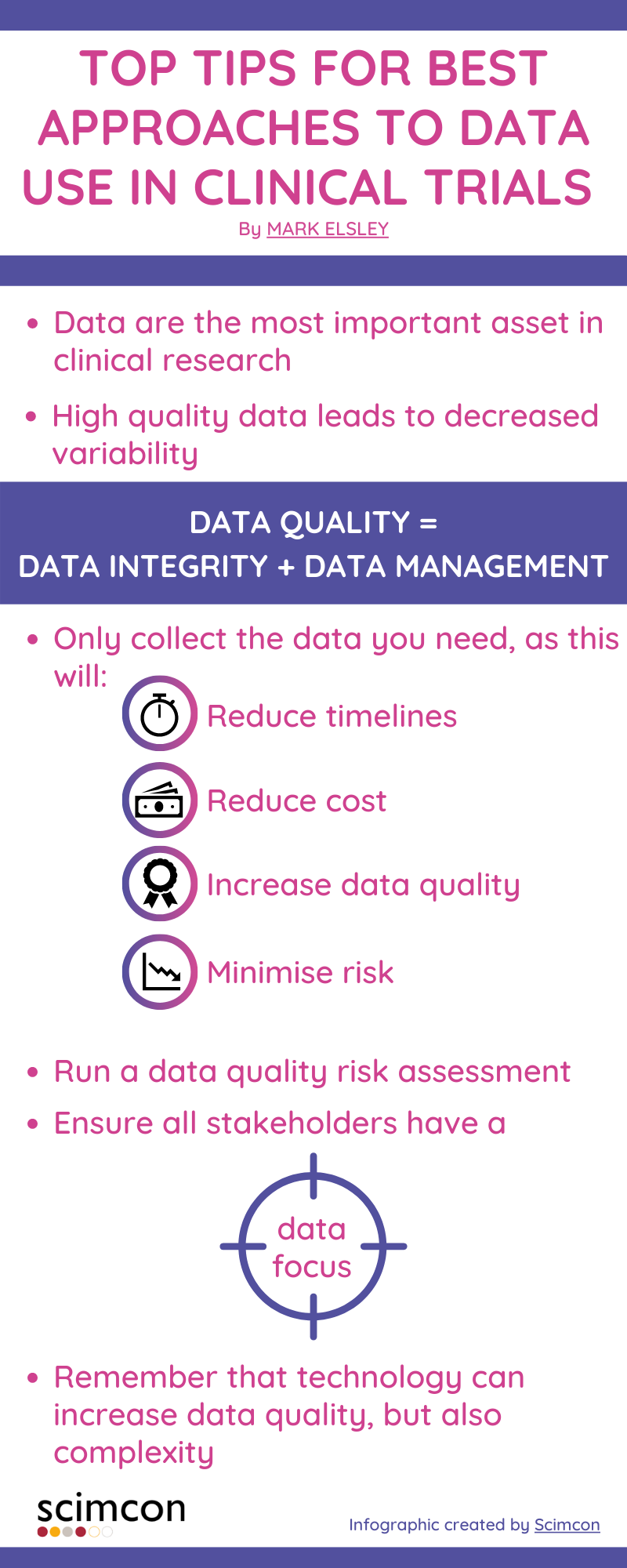
2020 has been a difficult year for most industries, not least for event and tradeshow providers. Luke Gibson, Founding Director of Open Pharma Research and Lab of the Future, shares his experience of running events in the laboratory industry, and what makes Lab of the Future such a unique event.
My name is Luke Gibson, and I am one of the three founding directors of Open Pharma Research. I have 30 plus years of experience in developing and running events, primarily in the financial and trade and commodity sectors. My colleagues Kirianne Marshall and Zahid Tharia bring a similar level of experience to the company.
Kirianne has had many years of experience in managing the commercial side of large congresses, such as Partnering in Clinical Trials, and research and development congresses. Zahid has 30 years of events experience too, particularly in running life science portfolios, and launching congresses/events. Our paths have crossed many times throughout our years working in events, and we eventually hit a point where all 3 of us had the capacity to try something new – something that was worthwhile, fun, and different to the corporate worlds we had become accustomed to. So that was why we created Lab of the Future – with a view to running events in a different way.
I’m not sure if I would describe it as a gap in the market, more an ambition to do things differently. There was a desire from all of us to build an event with a different approach to the one we would take when working for large organisations, because when you’re working on a large portfolio of global events that cover a variety of topics, you and your team are always looking ahead to the next event, and the focus on the longevity of a single event isn’t always there.
We wanted something that we can nurture and grow, something that we can work on year-round without getting distracted by the next thing on our list. It also allows us to stay within this space and build our community, without having to face pressures such as a year-on-year development strategy or diverse P&L. Our desire was to avoid these constraints, and create an event that we can continue to work on for a long time.
We want to be able to live and breathe Lab of the Future, but one of the interesting things about it is that it’s such a broad concept. On the one hand we deal with informatics, but on the other hand, we deal with equipment, technology, and all the connectivity between them – but even that’s just one part of it. We are not an informatics conference; we are not strictly an instrumentation conference; we also look at the innovation side of things.
I think the best way to describe how we see Lab of the Future is as a proxy for how you do science in the future. Everything pertains to more efficient processes; better results; or ways of creating breakthrough innovation, and these are all part of the picture of science in the future. And that is the lab of the future – where the lab is the proxy for the environment where you do the science that matters.
When we started off, we found we received a lot of queries from industry contacts who wanted to get involved, but certain topics they wanted to discuss didn’t necessarily pertain to the physical laboratory itself. But if it was relevant to science, then it was relevant to us. Things like data clouds and outsourced services may not be directly linked to the lab, but they still relate to how you work. So, within that, the scope for the Lab of the Future gets wider still, looking at areas such as how we can create virtual clinical trials, or use real world-data to feed back into R&D.
People are also keen to learn more from their peers and from other areas of the industry. Lab of the Future allows us to host senior speakers and keynotes who can tell us where we’re heading, and show us how the efforts of one area within life science feed into other areas. It presents us with an almost ever-changing jigsaw image, and it’s this strategic element that I think sets us apart from other events.
We attract a real mix of attendees, and that’s what I love about it. You can run a conference for people in a specific job function, such as a data scientist or an R&D manager, but what people really want to know is what the people around them are doing, to almost give them context of the industry as a whole. So, our conference doesn’t just exist to help you do your own job better, but it helps you to develop a concept of where your department is heading in the future, and what you should think about longer term. We aren’t telling scientists how to do their job today; we’re helping them think about their responsibilities for delivery in the future. Lab of the Future is about the delivery of science of the future.
Our sponsors and solution providers that support the conference are also very much part of our community, as they’re all innovating and making waves in this space as well. They’re in a space that’s always evolving to build the Lab of the Future; and they are part of that solution. So, we don’t merely facilitate a conference of buying and selling between providers and services, we offer a space where everyone is evolving together. It’s a real melting pot, and that’s the fun bit really.
Zahid’s background in life sciences definitely gave us a starting point. Further to that, we’ve found that every time we put something out, that our community engages, and as a consequence we’re introduced to people we never expected to be introduced to. The fact we’re always talking to people enriches our content – the people we meet and conversations we have change our way of thinking, and shape what we’re doing.
Although I’m in charge of our marketing operations, I have to say I’m not always sure where some of our contacts come from! One thing I’ve found quite surprising is the lack of reliance on a database – there’s a lot of power in word-of-mouth, especially in this space where everyone is working on something – why not share that? As we’re seen as adding value to the conversation, it allows people to find us through their connections and our supporters.
Scimcon is proud to sponsor Lab of the Future, and we can’t wait to see you at the Autumn virtual congress on 26 – 27th October 2021. Contact us today to learn more about our participation in the event, and stay tuned on our Opinion page for part 2 of our conversation with Luke.
From vision to reality: enabling true digital transformation in the lab?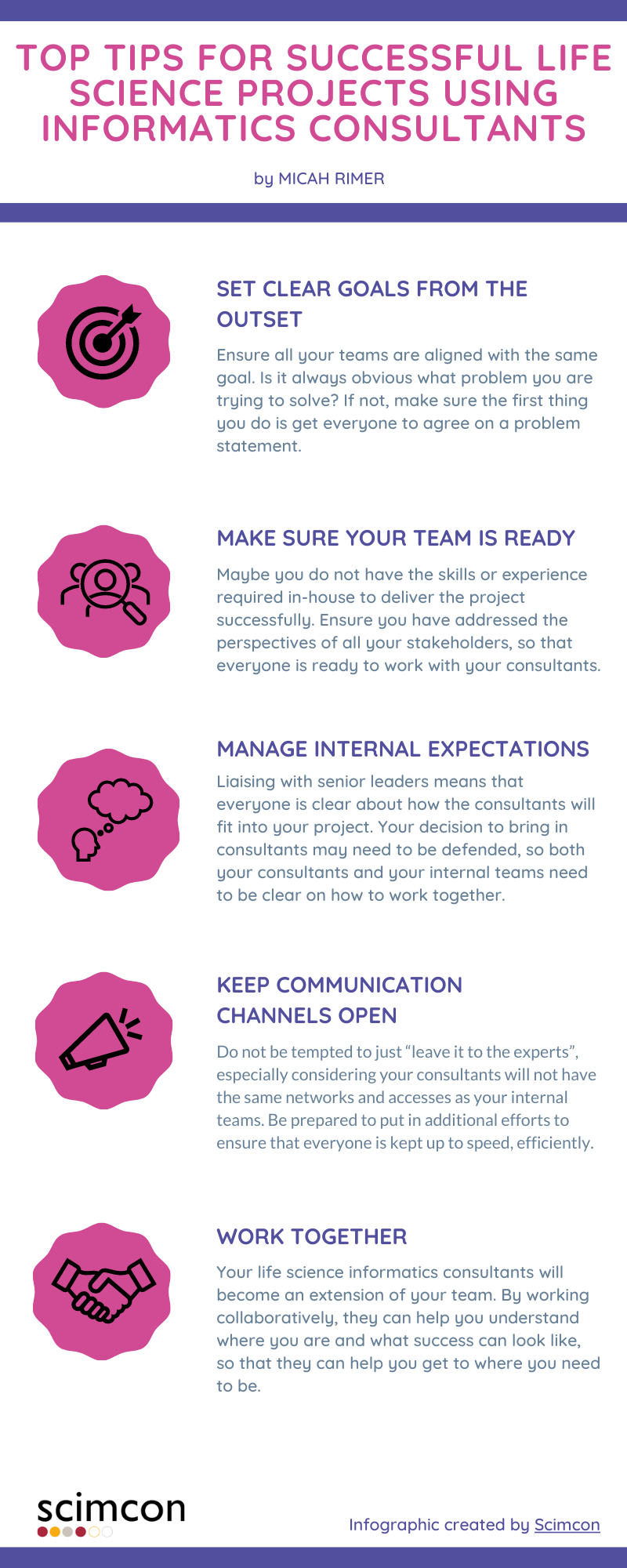
I am Mark Elsley, a Senior Clinical Research / Data Management Executive with 30 years’ experience working within the pharmaceutical sector worldwide for companies including IQVIA, Boehringer Ingelheim, Novo Nordisk and GSK Vaccines. I am skilled in leading multi-disciplinary teams on projects through full lifecycles to conduct a breadth of clinical studies including Real World Evidence (RWE) research. My specialist area of expertise is in clinical data management, and I have published a book on this topic called “A Guide to GCP for Clinical Data Management” which is published by Brookwood Global.
Data quality is a passion of mine and now receives a lot of focus from the regulators, especially since the updated requirements for source data in the latest revision of ICH-GCP. It is a concept which is often ill-understood, leading to organisations continuing to collect poor quality data whilst risking their potential rejection by the regulators.
White and Gonzalez1 created a data quality equation which I think is a really good definition: They suggested that Data Quality = Data Integrity + Data Management. Data integrity is made up of many components. In the new version of ICH-GCP it states that source data should be attributable, legible, contemporaneous, original, accurate, and complete. The Data Management part of the equation refers to the people who work with the data, the systems they use and the processes they follow. Put simply, staff working with clinical data must be qualified and trained on the systems and processes, processes must be clearly documented in SOPs and systems must be validated. Everyone working in clinical research must have a data focus… Data management is not just for data managers!
By adopting effective strategies to maximise data quality, the variability of the data are reduced. This means study teams will need to enrol fewer patients because of sufficient statistical power (which also has a knock-on impact on the cost of managing trials).2 Fewer participants also leads to quicker conclusions being drawn, which ultimately allows new therapies to reach patients sooner.
I believe that clinical trials data are vitally important. These assets are the sole attribute that regulators use to decide whether to approve a marketing authorization application or not, which ultimately allows us to improve patient outcomes by getting new, effective drugs to market faster. For a pharmaceutical company, the success of clinical trial data can influence the stock price and hence the value of a pharmaceutical company3 by billions of dollars. On average, positive trials will lead to a 9.4% increase while negative trials contribute to a 4.5% decrease. The cost of managing clinical trials amounts to a median cost per patient of US$ 41,4134 or US$ 69 per data point (based on 599 data points per patient).5. In short, clinical data have a huge impact on the economics of the pharmaceutical industry.
Healthcare organizations generate and use immense amounts of data, and use of good study data can go on to significantly reduce healthcare costs 6, 7. Capturing, sharing, and storing vast amounts of healthcare data and transactions, as well as the expeditious processing of big data tools, have transformed the healthcare industry by improving patient outcomes while reducing costs. Data quality is not just a nice-to-have – the prioritization of high-quality data should be the emphasis for any healthcare organization.
However, when data quality is not seen as a top priority in health organizations, subsequently large negative impacts can be seen. For example, Public Health England recently reported that nearly 16,000 coronavirus cases went unreported in England. When outputs such as this are unreliable, guesswork and risk in decision making are heightened. This exemplifies that the better the data quality, the more confidence users will have in the outputs they produce, lowering risk in the outcomes, and increasing efficiency.
ICH-GCP8 for interventional studies and GPP9 for non-interventional studies contain many requirements with respect to clinical data so a thorough understanding of those is essential. It is impossible to achieve 100% data quality so a risk-based approach will help you decide which areas to focus on. The most important data in a clinical trial are patient safety and primary end point data so the study team should consider the risks to these data in detail. For example, for adverse event data, one of the risks to consider could include the recall period of the patient if they visit the site infrequently. A patient is unlikely to have a detailed recollection of a minor event that happened a month ago. Collection of symptoms via an electronic diary could significantly decrease the risk and improve the data quality in this example. Risks should be routinely reviewed and updated as needed. By following the guidelines and adopting a risk-based approach to data collection and management, you can be sure that analysis of the key parameters of the study is robust and trust-worthy.
Aside from the risk-based approach which I mentioned before, another area which I feel is important is to only collect the data you need; anything more is a waste of money, and results in delays getting drugs to patients. If you over-burden sites and clinical research teams with huge volumes of data this increases the risks of mistakes. I still see many studies where data are collected but are never analysed. It is better to only collect the data you need and dedicate the time saved towards increasing the quality of that smaller dataset.
Did you know that:
In 2016, the FDA published guidance12 for late stage/post approval studies, stating that excessive safety data collection may discourage the conduct of these types of trials by increasing the resources needed to perform them and could be a disincentive to investigator and patient participation in clinical trials.
The guidance also stated that selective safety data collection may facilitate the conduct of larger trials without compromising the integrity and the validity of trial results. It also has the potential to facilitate investigators and patients’ participation in clinical trials and help contain costs by making more-efficient use of clinical trial resources.
Technology, such as Electronic Health Records (HER) and electronic patient reported outcomes (ePRO), drug safety systems and other digital-based emerging technologies are currently being used in many areas of healthcare. Technology such as these can increase data quality but simultaneously increase the number of factors involved. It impacts costs, involves the management of vendors and adds to the compliance burden, especially in the areas of vendor qualification, system validation, and transfer validation.
I may be biased as my job title includes the word ‘Data’ but I firmly believe that data are the most important assets in clinical research, and I have data to prove it!
Scimcon is proud to support clients around the globe with managing data at its highest quality. For more information, contact us.
1White, Christopher H., and Lizzandra Rivrea González. “The Data Quality Equation—A Pragmatic Approach to Data Integrity.” Www.Ivtnetwork.Com, 17 Aug. 2015, www.ivtnetwork.com/article/data-quality-equation%E2%80%94-pragmatic-approach-data-integrity#:~:text=Data%20quality%20may%20be%20explained. Accessed 25 Sept. 2020.
2Alsumidaie, Moe, and Artem Andrianov. “How Do We Define Clinical Trial Data Quality If No Guidelines Exist?” Applied Clinical Trials Online, 19 May 2015, www.appliedclinicaltrialsonline.com/view/how-do-we-define-clinical-trial-data-quality-if-no-guidelines-exist. Accessed 26 Sept. 2020.
3Rothenstein, Jeffrey & Tomlinson, George & Tannock, Ian & Detsky, Allan. (2011). Company Stock Prices Before and After Public Announcements Related to Oncology Drugs. Journal of the National Cancer Institute. 103. 1507-12. 10.1093/jnci/djr338.
4Moore, T. J., Heyward, J., Anderson, G., & Alexander, G. C. (2020). Variation in the estimated costs of pivotal clinical benefit trials supporting the US approval of new therapeutic agents, 2015-2017: a cross-sectional study. BMJ open, 10(6), e038863. https://doi.org/10.1136/bmjopen-2020-038863
5O’Leary E, Seow H, Julian J, Levine M, Pond GR. Data collection in cancer clinical trials: Too much of a good thing? Clin Trials. 2013 Aug;10(4):624-32. doi: 10.1177/1740774513491337. PMID: 23785066.
6Khunti K, Alsifri S, Aronson R, et al. Rates and predictors of hypoglycaemia in 27 585 people from 24 countries with insulin-treated type 1 and type 2 diabetes: the global HAT study. Diabetes Obes Metab. 2016;18(9):907-915. doi:10.1111/dom.12689
7Evans M, Moes RGJ, Pedersen KS, Gundgaard J, Pieber TR. Cost-Effectiveness of Insulin Degludec Versus Insulin Glargine U300 in the Netherlands: Evidence From a Randomised Controlled Trial. Adv Ther. 2020;37(5):2413-2426. doi:10.1007/s12325-020-01332-y
8Ema.europa.eu. 2016. Guideline for good clinical practice E6(R2). [online] Available at: https://www.ema.europa.eu/en/documents/scientific-guideline/ich-e-6-r2-guideline-good-clinical-practice-step-5_en.pdf [Accessed 10 May 2021].
9Pharmacoepi.org. 2020. Guidelines For Good Pharmacoepidemiology Practices (GPP) – International Society For Pharmacoepidemiology. [online] Available at: https://www.pharmacoepi.org/resources/policies/guidelines-08027/ [Accessed 31 October 2020].
10Medical Device Innovation Consortium. Medical Device Innovation Consortium Project Report: Excessive Data Collection in Medical Device Clinical Trials. 19 Aug. 2016. https://mdic.org/wp-content/uploads/2016/06/MDIC-Excessive-Data-Collection-in-Clinical-Trials-report.pdf
11O’Leary E, Seow H, Julian J, Levine M, Pond GR. Data collection in cancer clinical trials: Too much of a good thing? Clin Trials. 2013 Aug;10(4):624-32. doi: 10.1177/1740774513491337. PMID: 23785066.
12FDA. Determining the Extent of Safety Data Collection Needed in Late-Stage Premarket and Postapproval Clinical Investigations Guidance for Industry. Feb. 2016.
How to choose the right informatics consultant for your organisation?With 20 years’ experience in the Biotech and Life Sciences industry, Micah Rimer’s success has been primarily due to his ability to read organisations, frame the problems and identify the best path to bring people together to achieve the desired goals. During Micah’s time working in Biotech and at big pharma he has successfully deployed consultancy groups within lab informatics and clinical projects.
Scimcon has supported Micah and his teams extensively on high profile projects in big pharma and Biotech. In this blog, Micah draws on his valuable experience to provide insight and tips on how to best to engage and work with consultancy groups.
Deciding on the right Informatics Consultant for your pharma or Biotech company is not a simple task, despite the various vendors available. Informatics in the Life Sciences industry covers a wide scope, so it is unlikely you will find an appropriate consultant through Google’s search algorithms. To find the best fit, you should consider what the key priorities are for your engagement, find a partner that you can trust and work well with and one that can bring a unique perspective to your collaboration.
Starting out with the key skills and contributions that are needed, as in any selection process, is the first step in identifying the right Informatics Consultant.
While technology is constantly advancing, I would encourage you to think hard if the tech skills are really the most important aspect for a successful collaboration. From my experience, while an understanding of the underlying technology and what it is capable of is important (be that LIMS, ELN, eCOA, eDiaries, PV software etc), what is of more importance is someone who can both communicate and partner with the organisation. A successful computerised system consists not just of the software, but also the people that will use it and the processes they will follow. All of those components must be balanced for a successful implementation, so while the technology piece may feel like the most obvious area to address, do not underestimate the work with the people and processes.
For example, there was a point in my career where I was asked to implement a Pharmacovigilance (PV) signal detection system for an organisation I was employed by. This had been a critical gap in the organisation for a long period of time, and there were several options on how to proceed, but no easily defined right answer. We could look to either evaluate and buy something off the shelf, hire a company to build a custom-designed tool, or alternately we could try to finalise a prototype that a programmer in the department had been playing around with for a while. (His tool had nice features, but still some technical gaps and no clear path forward to make it robust enough to use in such a highly regulated environment). In looking for external help, some may have favoured looking to recruit Informatics Consultants with a background in Pharmacovigilance, or perhaps with the technology skills to leverage the drug safety system platform. But in choosing Scimcon, I went with the partner I trusted to help evaluate the options and lead a successful implementation in that particular organisation. A fantastic off-the-shelf tool would never have been a success if people did not want to use it because they preferred the home grown highly customized (but invalidated) prototype.
With Scimcon on board, we were able to evaluate the pharma and drug safety landscape and determined that there could be a good path forward with the prototype that had already been developed. We were able to establish an effective team, drawing upon the Pharmacovigilance expertise in the department to address business process and usage questions. The programmer who built the prototype had the vision for how the software should work and what needed to be done from a technical perspective. Scimcon was able provide the knowledge and experience of how to move a prototype to a production system and validate a custom-defined tool that had been built by a programmer who does not have expertise in documentation. The output was widely recognised as a huge success.
It is important to keep in mind what gaps you are trying to close and what capabilities are needed to fill them: – Maybe you need the knowhow to get a project completed in a challenging environment; the technical skills to do the programming; the expertise with documentation; or you need to access people who have exceptional attention to detail to make sure a system is appropriately qualified and works as intended.
Whatever your challenge, you should ensure that the skillsets available from your informatics consultancy match the challenges you are facing.
As with many relationships, the more time you work together, the more trust you build up. This just proves that the importance of having established relationships and ways of working cannot be understated. No one is perfect, but the devil you know may indeed be a better fit than someone new to you. Always think about building up relationships for the future; it is a small world.
With this in mind, when looking for life science Informatics Consultants to partner with, one key consideration is to determine how they will be able to deal with adversity. What are they prepared to do if they see that a project is starting to go sideways? When speaking with them, ask them about projects that did not go according to plan or did not work out, and how did they manage that situation? What did they learn from that? Do they do anything differently from those lessons learned? Consultants, and Informatics Consultants especially, have all been thrown into projects where the requirements and expectations were not appropriately set in the beginning, which lead to problems later. Good consultants always learn from these situations and avoid repeating the mistakes that led them down that path.
Another key consideration for the interviewing and recruitment process is the quality of the questions the consultants ask and how well they listen.
Before you speak with them, think about what questions you would ask if you were in their shoes, and not having access to all the internal information you have: – Do they ask the right questions? Maybe they ask some questions you had not thought of? And how well are they able to play back what you have told them?
Often sales or account managers are very focused on telling you how easy it is for their teams to deliver, and how they will be able to deliver no matter what restrictions and conditions you add into the situation. Are there any conditions of the setup that would prevent the consultants from accepting the assignment? If there is nothing you can state that would cause them to be concerned, then maybe they are too good to be true! Look for their understanding that implementing systems is not usually a walk in the park. A truthful consultant is extraordinarily valuable.
Of course, it is always good to check the references as well. Does the life science informatics consultant have customers that have worked with them over a long period of time at different companies?
Bringing in consultants is typically not so easy, so numerous long-term engagements at different stops can itself also be a sign of delivering quality.
You should also look for feedback on the work the consultants delivered. There is a huge business out there for the larger agencies which spend time and resources selling at the executive level, but then use more junior resources to do the work. Having senior people presenting and being able to provide a concise message is important, but by and large you typically want to find people who are getting the work done. You must never lose sight of the goals to deliver projects on time and the overall drive for results.
Consider all of these aspects and listen to your instincts. Typically, these are not small or unimportant investments in the first place. Taking time to ensure you have the right fit is important. At the end of the day, you need to feel comfortable and confident that the people you choose can be counted on to deliver for you.
To me, one of the most valuable skills I look for with Informatics Consultants is the ability to bring a unique perspective. In a management training course I once took, the advisor summed it up this way: “Look, you are all smart people. If you come to a situation where you do not see a solution, it is probably because there is not just one solution. When you arrive at a situation like that you will have to find some way to balance and continually adjust, as there is likely no one right answer.” When I am bringing people in to support me on projects, I am looking for that ability to connect the dots and leverage previous experiences to help find the best solution.
One of the valuable parts of working as a consultant is that you get to see a variety of companies, all with different setups. While some people find that lifestyle stressful or challenging, there is an inherent value in being exposed to so many alternative organisational environments. If you can synthesize new information and learn rapidly, all these experiences add up to quite some knowledge. The more you can see things repeated with modified parameters, the easier you can find what works and what does not work, which is why we look to simulations to find some solutions. Informatics Consultants that have worked in different Biotech and big pharma settings with a wide exposure to different projects can help bring that knowledge to your organisation.
Finding consultants who have worked in various parts of life sciences or in other fields can also help to provide a more well-rounded view. At times, that enables seeing solutions in places you might not expect. They can also recognise patterns in the organisation you may be too close to see. The combination of being able to share these insights, as well having seen so many challenges and varying situations, can allow consultants to provide services to you that you simply are not able to manage internally.
Finding the right Informatics Consultant for your life sciences organisation is not an easy task; you need to make sure that you are bringing in the right skillset to match your situation.
The priority is to find people you can trust and who you feel confident can work in your environment. While the technology of course plays a role, do not overstate the importance of it and dismiss the (not insignificant) people and the processes aspect to our work. The system in itself will not be considered successful if people are not comfortably using it. Look for companies that can adjust to your needs and find solutions to your challenges as the landscape continues to change. In the end, that is what counts, finding a way to get the job done.
Scimcon is proud to offer its consultancy services to Biotech and big pharma companies around the world. To find out how we can help you achieve success in your implementation project, contact us.
